The RAIN Framework: How I Actually Learned to Stop Reacting
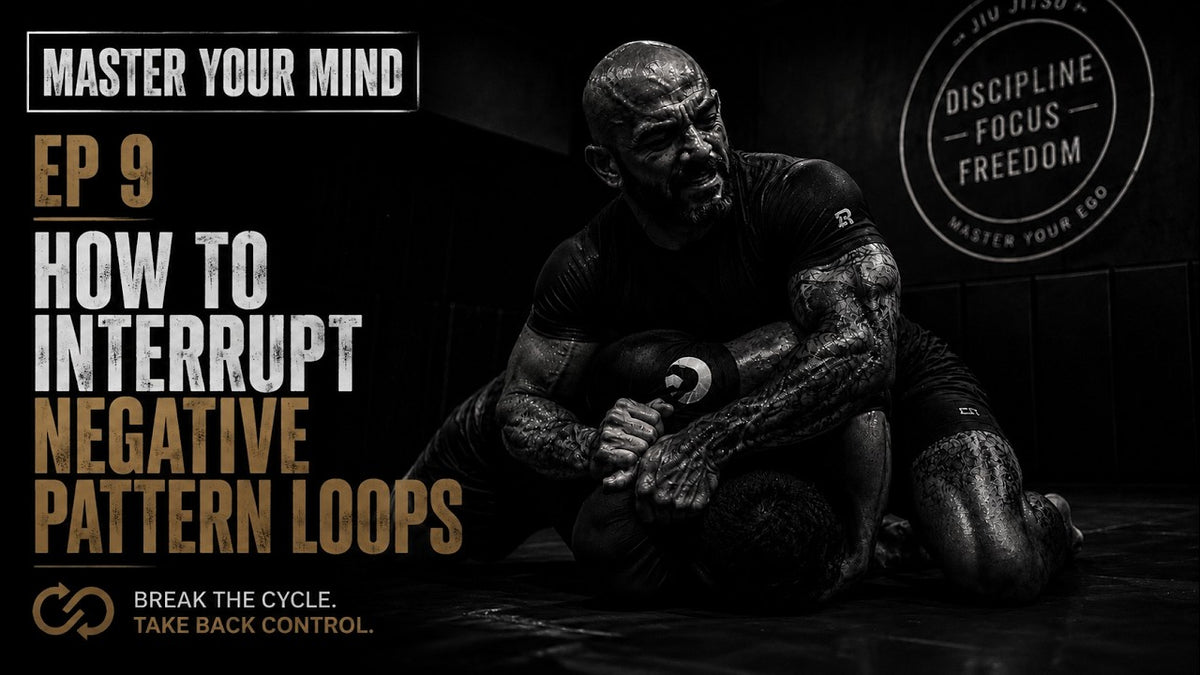
Watch the full episode: Master Your Mind EP9 – How to Interrupt Negative Pattern Loops
Every reaction you don't like about yourself was built for a reason. It kept you safe once. But the wiring doesn't update on its own — you get older, get a career, a partner, maybe kids, and the pattern is still running underneath all of it.
What an emotional hijack actually costs you
Picture the physical version of it: heart rate spike, cold sweat, a hot flush, a complete loss of logical function. In that state you're not looking at the situation, the person, or the context for what it actually is — you're looking at it like the same threat it's always been. Any decision made from inside that state, roughly 95% of the time, leads to a bad result. Not because you're a bad decision-maker. Because you're not making a decision at all — the emotion is.
So the actual goal of self-development isn't becoming unfazed. It's getting yourself out of that state and back into a logical one before you act.
The RAIN framework
Four steps, and none of them involve suppressing anything:
Recognize. Catch the feeling as it's coming up. You're not thinking about what state you're in while you're consumed by it — so the pause to notice "I'm getting triggered here" is the first real step.
Investigate. Ask why. Why this reaction, to this person, in this moment? The moment you ask why, you've already taken two steps back toward logical thought.
Allow. The hardest step. Allowing yourself to feel something doesn't mean acting on it or venting it — it means not shaming yourself for feeling it. Being strong doesn't require being completely unfazed. That's not strength. That's numb. If you shut down anger and sadness, you shut down joy and love along with them — they run on the same system.
Nurture. Understand why you react the way you do. If you've been through a lot, you're naturally more susceptible to strong emotion — and that's not a flaw to fix, it's a reason to be gentler with yourself while you're doing the work. You can't control whether you feel something. You can control what you do with it after.
The second tool: stop and choose
Alongside RAIN, there's a simpler practice — catching the moment you'd normally react, and telling yourself: no, stop, think about this first. That single choice is what separates a bad decision from a bad moment. Two examples make it concrete: standing in a courtroom paying a lawyer to try to keep you out of jail, over a decision that took two seconds to make and years to pay for. Or getting cut off in traffic — everything in you wants to escalate, and the version of you that doesn't stop and choose is the version that ends up on someone's phone camera or in front of a police car, over one decision that took no thought at all.
Why it doesn't work on the first try
If a pattern's been running for twenty, thirty, fifty years, it's not going to unwind the first, third, or tenth time you practice something different. That's not proof it doesn't work. Neuroplasticity is well documented — enough repetitions of a different response and your brain genuinely rewires around it. The belief that you can't change after this long is, honestly, one of the biggest lies you'll ever tell yourself.
What it actually looks like on the other side
The old version of this pattern, for me, looked like zero to kill over normal day-to-day things — and a running victim-mentality soundtrack underneath it: here we go again, why does this always happen to me. No research, no framework, just reaction.
Now — more responsibility than I've ever carried, more pressure than I've ever had, and it doesn't spill over. When something goes wrong I stay regulated, deal with it, and it's done. Not avoidance. Regulation.
That's the actual shift: not becoming a different person, but coming into alignment with the one you already are, instead of staying at war with yourself over every reaction you have.
Previous: Childhood Trauma (EP8) | Next: Masculinity Today (EP10)